PODCAST - how to get most roi from talentlms
===
[00:00:00] Learning Transformed is brought to you by eLearning Partners, your guide to designing transformational learning experiences in the age of AI For millennia, human intelligence was the highest form of intelligence on Earth, until now. Hi, I'm AI. I can process more information in seconds than any human in a lifetime.
This shift raises not only practical questions about the future of learning, but existential ones about the meaning of human life, growth, and evolution
On this podcast hosted by me, Johnny Havey, we navigate these questions with clarity, creativity, and confidence. As the most adaptable species on the planet, we can not only survive the rise of [00:01:00] artificial intelligence but create better human-centered AI-powered learning experiences that elevate humanity to a new era of abundance, transformation, and meaning
AI is rising and so are we
Now let's dive in
Today on the show, I'm gonna share with you how more than 300 clients of mine are leveraging TalentLMS, and how they are getting the best and biggest return on their time and monetary investment into the software. Now, like I said, I have more than 300 clients using TalentLMS. And what I teach all of them, and what I want you to do when you're looking at any software, but specifically when [00:02:00] you're looking at a software to create internal change at your organization, you need to start with what is the return on investment that you're looking at getting?
Return on investment, also known as ROI. I talk about ROI a lot on this show and on my YouTube channel, and it's rightfully so. ROI is the most important thing that you and I need to look at in our businesses and in our departments. And it's really because if you want your passion for teaching people, for building people, for growing people, for helping develop people, for leading teams, if you want all of this to come to fruition, you need to figure out how to have the conversation with your leadership, and you need to figure out how to, as a [00:03:00] company, to get the most return on your investment, any initiative that you put into place.
I work with S&P 500 companies and amazing teams that are passionate about building culture and really building a safe work environment that fosters collaboration and growth. Well, in order for any of this to happen, we need to make sure that there's a return occurring. Now, for TalentLMS, TalentLMS is primarily an internal system, an internal learning management system, an internal learning experience platform, whatever you want to call it, it is internally facing.
What does this mean? This means that it focuses on serving your employees, your team members, and it does a phenomenal job at doing this. Now, the flip side of this would be a system built externally to serve your customers. [00:04:00] Well, TalentLMS has some integrations that you can use to serve your customers, to sell programs, and even more so, which I think is actually more possible with TalentLMS, you can utilize TalentLMS as a training software for your customers to make sure that they are equipped with everything they need to know to get the most value out of your products and services.
This is where I really see you being able to leverage TalentLMS externally. But in general, when we're looking at TalentLMS, we want to focus on serving our employees. What this is gonna do is this is going to increase employee retention, which is huge. When you increase employee retention, guess what? The return on investment is you are decreasing your expenses.
So we have the profit equation here. Profit equals revenue minus expenses. Well, [00:05:00] when you increase your employee retention, you are decreasing your expenses because what expenses are we getting rid of? Hiring costs, training costs, costs to... We're also decreasing Time to competency. This is a big reason why I have clients invest into Talent LMS, 'cause they're looking to decrease the time it takes for an employee, a new employee, to become competent at their job, to more than just break even at their job.
What this is doing is it's making each employee less of an expense and more of an income or revenue producer, and that's really the return on investment we're looking at here. Now, you're... How are we doing this? Well, you are going to increase the effectiveness of your employees. Effectiveness, meaning your employees [00:06:00] know what the right things to do are.
They're able to do the right things. This is a big focus of my clients when they invest in Talent LMS. And this goes hand-in-hand. We also wanna increase the efficiency. Wanna increase effectiveness first, and then efficiency, though, because we wanna make sure that our employees, our team members, are doing the right things before we make sure that they are doing things right.
'Cause your team members could be doing the things right and not be focused on doing the right things. So this is really the return on investment that my clients, that my over 300 customers on Talent LMS are leveraging it for, to increase employee retention, decrease time to competency, increase employee effectiveness and efficiency, ultimately increasing revenue and decreasing expenses at their organizations.
And [00:07:00] then, once they do all of this, some of my clients start looking at how can we leverage Talent LMS externally. How can we more specifically utilize Talent LMS to increase product adoption
And increase Customer retention. I mean, we're already doing it on the employee side, we may as well leverage it on the customer side. Now, I do believe that this is the best use of TalentLMS externally. You could also technically build a program and create a new profit stream and sell it. Just takes a lot more integrations, and I just...
To have other softwares, I prefer using that. But you could easily create a login portal for your customers and give them access to it so that they can get more out of your products, out of your services, therefore making them more likely to adopt and purchase [00:08:00] them, and to stay your customers longer. Now, if you decide today that TalentLMS is the software, the solution that you've been looking for to increase the return on investment of your time and your money at your business, then I invite you to grab a free trial in the description and in the show notes.
By using my link to grab your free trial, I'm also gonna hook you up with my TalentLMS Made Simple program, which is gonna empower you to set up A to Z everything you need to do inside TalentLMS to start creating a return on your investment today. I'm gonna set you up to increase your employee retention and to decrease the time to competency of your team members.
Ultimately, we're gonna make your team more effective and efficient at their jobs. That is why I created TalentLMS Made Simple, and it pairs really well with the free trial I'm able to offer you. You can also go to elearningpartners.com/TalentLMS to grab your free trial and access my TalentLMS Made Simple program.
Now, I'm gonna dive in [00:09:00] and show you how some of this stuff works in TalentLMS, but if you really wanna dive in, the program is for you. So the biggest challenge that I see in businesses, and I've been doing this for over a decade, is when we're looking at creating any sort of education program to empower our employees, we can't just create it and hope it gets results.
What we need to do is we start with what we already talked about. Is step one, we need to define what is the ROI that we're looking to get. Are you looking to increase revenue? Are you looking to decrease expenses? Whatever it is, we need to start there, and we need to really look at this even more specifically.
How are we going to either increase revenue or decrease expenses, or do both? Well, that is where step two comes in. Step two is defining your KPIs. So we got ROI and KPIs. Well, you could technically have multiple [00:10:00] return on investments that you're looking at getting, so different ROIs and different KPIs.
What is a KPI? KPI is a key performance indicator, and all it is in this case is KPIs support your ROI. So we're tracking our KPIs to see if they're actually creating- ROI. KPIs is much more specific. So if we're looking at increasing our revenue, so we got profit equals revenue minus expenses, and we're looking to increase our revenue.
Well, one of the KPIs that we might look at to increase revenue is we want to increase our sales conversion rate, so that could be our KPI. Sales conversion rate. What is a sales conversion rate? Well, this is for simple math, for every [00:11:00] 100 leads, how many of these leads become clients? Let's say that the current conversion rate is somewhere around two.
So for every 100 new leads that comes in, we get two customers out of it. What's two divided by 100? Well, this is 2%. This would be a conversion rate of 2%. So maybe this is the KPI we want to impact to ultimately create the ROI we're looking for, the ROI being to increase revenue. Well, if we increase revenue, then what we need to do is one of our options is we can increase our conversion rate from 2% even to 3%, 'cause then for every 100 new leads, we have three new customers.
This would be huge. We may even wanna increase this more. Maybe you wanna increase this to 5%. That'd be a two and a half X increase. So that's step two, is we set [00:12:00] what KPIs are we looking at improving, and we need to come up with how to actually track them, and that's where we come up with, hey, 100, every 100 leads, we get two customers, 2% we want.
This is our starting point, 2%. We wanna go up to 3% or even 5 to 10%, whatever it is. But you need a foundational metric that you can track in order to impact your ROI. Then step three is build the program Now we know what we're building though. We're building a program to improve our sales conversion rate.
So now we need to find someone on our team or bring in an outside expert to help us figure out the best path forward to go from a 2% to a 3% or even more conversion rate. And then we build the program around that. You see how this is different from, okay, well, we are looking [00:13:00] to train our people, wanna build culture.
We think that, you know, we train our people on sales, it'll get better. We do this in our finance department, it'll get better. We improve our onboarding, it'll get better. Gotta start with ROI, then look at the specific key performance indicator or KPI that we're looking to improve, set the baseline, that is our foundation, and then build the program to bring the 2% up to 5%.
And then we gotta track the data and the metrics, not only in TalentLMS, but what's actually happening. For every 100 leads, are we improving? Hopefully we are. So now let's dive into TalentLMS. If you're listening to this as a podcast, I invite you to stick with me. And if you wanna see how this looks, you can go to my eLearning Partners YouTube channel, find the episode, and check out the video.
I'm also gonna link to the episode in the show notes. But really, [00:14:00] we're just going through how this ROI, KPI, build the program strategy works in TalentLMS. Once you log in, what you're gonna wanna do Is really familiarize yourself with the different sidebar options. The main ones we're gonna look at today are courses.
I mean, learning paths are important, but it's really just a tool to get us to improve those KPIs and ultimately improve the ROI. You don't have to use it, but you can. A learning path would be stringing multiple courses together. Then we have groups and branches. We can go through that a little bit. But really, we're gonna be looking at reports.
This is how we're gonna tell, okay, so is the KPI improving? Great. Are people engaging with our program? Great. That must be why the KPI is improving. And I'll go through the different options of what you do when KPI is improved, stay the same, when you see [00:15:00] people actually doing things in TalentLMS, et cetera.
I'll go through that after we actually look at some TalentLMS specific stuff here. Start with courses. So you go into TalentLMS, you go to Courses. This is where when you've figured out what program to actually build, you go in here and you build the course. Now, different options, and I'll go through specifically every single option, how to do it in the TalentLMS Made Simple program.
But just high level, you click on Add Course, and we can add a bunch of different things. So TalentCraft is amazing. It is the AI-powered authoring software to author courses with prompts. Then we can make edits and even do additional prompts. I highly recommend that you check this out, and it's amazing 'cause you can grab your free trial of TalentLMS and use this for free.
Now, you're not gonna be able to export it and put it somewhere else, but you may as well just invest in TalentLMS and have your programs live there. TalentCraft is amazing. Well, we open this up. [00:16:00] We have a bunch of different options. I just say start this from scratch, and then we're gonna give it a prompt.
And the prompt, it's gonna be, we're gonna create a page about build me a page/module/course on how to improve my sales team's Conversion rate, turning leads into customers. Boom. Now this is gonna be pretty generic, but you could put any best practices you have, input it in the prompt, or there are some other options.
You can take a document and input it, and it will work from there. So here we go. It's gonna create some images, but really, it's mapping out a module. Pretty cool. Now this is real quick. You can go back and forth, add additional prompts, and build out your entire course with prompts. [00:17:00] Love this feature. Now, there's some other things we can do too.
We can go to Add, and we can add standard content, just anything from video to text, audio to presentations to iframes. We can also add SCORM, xAPI, and CMI5 courses. Also assignments, surveys, tests, extra instructor-led training, et cetera, and more. Now, none of this really matters. What matters is building a program that actually helps you bring up that KPI.
'Cause if you improve that KPI, you're gonna improve the ROI, and you're gonna ultimately increase profit, which is what we wanna do. This empowers you to do more of what you love, which is training and developing people. When we can show ROI, we get to do more of what we wanna do, and we get to serve more people.
It's a win-win-win for everyone. So once you're ready to publish your course, you just go to Publish, and there you go. Now, let's go back. This is your course library. Once you've [00:18:00] created courses, what you can do is go to Learning Paths and add a learning path, and this is where you can add- Your courses. And this is great if you have a bunch of courses that can really fulfill different needs or if you have different sales teams, and you have specific courses that are gonna help improve conversions, but you might also have other courses that help improve how many leads that you're actually getting.
And you might have other courses that empower your sales team to sell different products, different services. So you can create a learning path for each department, each team, or even each person. Remember, what really matters is how do we impact ROI by impacting our KPIs, by building a program that improves our KPIs.
That's it. Now, the course store is interesting. What you can do is if you've come up with your KPI and a course already exists that supports that KPI, you can just instead of build one, find one that already exists that is in the talent library that TalentLMS has. The goal here is to improve the [00:19:00] KPIs.
That is the goal. The goal is to powerfully serve our employees, serve our learners. How do we best do that? Well, this could be the best way and could save you and your team a lot of time. Now, groups and branches are interesting, and I love both of them. Um, branches empowers you to set up your TalentLMS software and serve different markets.
You can ha- you can set up a different branch for different cities, different offices. You could set up a different branch for different franchises. I have clients that have different franchises, and they want their own learning environment for each franchise. It just breaks it down. So you have one system, TalentLMS, but you have one, but then you have specific learning environments for these different areas.
Another thing you can do is you can have a branch that is internally serving your employees and, uh, training them, and you can have a branch set up externally that whenever you bring in a new client, they can go and learn more about how to get the most out of your different services and products. [00:20:00] They can log in to your branch.
It's just a portal for these people to log into, and it's segmented from the other branches. So you can have an employee branch and a customer branch. Great way to use this. So you can also group your courses into groups. So when someone joins a branch, you can give them access to all the courses as a part of a group.
You can also do that in learning paths, but learning paths are more like an A to Z journey of you need to take all of these courses in this order. A group is more like, here's all the finance courses, all the marketing courses, all the s- product-specific courses, and then you can just give access all at once to a user with that group.
So there's a bunch of automations you can do, and you can even integrate TalentLMS into other systems. So definitely check that out as well. And then we get to reports. Now, reports is extremely important. We have ROI on top Then we have KPIs. And then we [00:21:00] have TalentLMS, which is your tool that you're using to impact all these things.
TalentLMS is gonna impact the KPIs. KPIs are gonna impact the ROI. How do we know if any of this is working? That's where reports comes in. And specifically, we have some options here. What you're gonna find is that either you're gonna see KPIs improve. So your, your KPIs improve. This is fantastic. And you see that there is engagement in TalentLMS.
People are taking your courses, taking your programs, going through your learning paths. This is awesome. KPIs improving and engagement, we're real happy here. This is a big old smiley face. The other option that we may see is, yeah, we also see [00:22:00] KPIs improve. This is fantastic. We set that KPI. We said that we wanted to improve our conversion rate for every 100 leads.
Instead of getting two new clients, we're getting five now. This is fantastic. But what is going on? There's no engagement There's no one in here. What the heck? This is still a positive outcome. I am still happy. I just don't know if I need to keep investing in TalentLMS. I need to find out why this happened, 'cause this is great.
'Cause sometimes what happens is if you have this goal and you set it in your organization, we're gonna improve conversion rates, your sales team is like, "Oh, yeah. Well, if we improve conversion rates, we're gonna get paid more money. I'm gonna figure out how to do it, and I don't need your program to do that.
I'm gonna go study a bunch of my own stuff. I'm gonna take my own courses, all this stuff," right? And that's why the KPIs improve. So what we wanna do is figure out why. There's no engagement, we wanna figure out why. If there's a bunch of [00:23:00] engagement, then we can make the assumption that this is why. Now, the other thing we might see, though, is that KPIs either stay the same or they decrease.
Both of these I do not like. Now, they stay the same, I guess that's not as bad as decreasing, but I still don't like that. And we see no engagement. Well, in this case, we can't blame TalentLMS. We are sad, though. I, I am sad when I see this. Our KPIs are decreasing and there's no engagement, or they're staying the same and there's no engagement.
The good news, though, we're this, you know, it's kind of ... You can have a, you know, just a, a normal face here, too, is I'm not sure yet if TalentLMS is the solution or not. So we're investing in TalentLMS. No one's in there, so what we need to do is figure out how to get them in there. Incentivize them to get in there.
Educate them. We need to educate our employees on, [00:24:00] "Hey, by going and taking these courses, you're going to improve your conversion rate, which means you're gonna get paid more." That's the ROI for the employee. Now, when we're looking at all of this, we're really what we're doing is we're aligning the ROI of your company.
So this is you, your company. We're ali- aligning this with the ROI of our employees. We need to figure out what they're looking for. What is in it for them to even take our program? How do we make sure that we get them to actually engage? 'Cause when they engage, we have the opportunity to increase their KPIs.
If they don't engage, we can still increase their KPIs, but in that case, if they increase, we need to find out why, and that's gonna help us really figure out what is in it for our employees. Where these two circles overlap, this is what we call the ROI pie of our employees. This is what we wanna focus on to grow our employees and to grow our business.
So the [00:25:00] last option here is our KPIs either stay the same or decrease, and there's engagement. In this case, we're also sad, but this doesn't necessarily mean that we need to get rid of TalentLMS. What this does mean is that even though they're engaging, the content they're engaging with is obviously not helping them.
It's not driving the KPI Which means it's not improving the ROI or ultimately the profit of our business. So what we need to really look at is what do they actually need in order to improve this KPI, then redo our program in that way. The good news is they're already engaging, so people are putting the time in, so now we just gotta get them to engage with the right content.
So this, I guess, is also a neutral phase when we really look at it. But how do we even figure out what bucket we fall in [00:26:00] here? Well, that's where we go to Reports. And we can go to Reports and see an overview. We can also pull up on a user-to-user basis how people are doing, and we can ask these questions on a people-to-people basis and figure it out.
We can also ask these questions on a course-to-course basis to see, okay, this course was related to this KPI, and there's no engagement on that course, but this KPI is improving. Well, maybe we don't need talent LMS or, and/or we need to figure out why it's improving, build a curriculum around that, and then get the people that aren't improving actually in here to engage.
There are also may be people that engage and people that don't engage, and there may be people that are engaging and they're learning a bunch and they're teaching other people. That's a huge win, too. But this is how you use the user reports. You take the user reports, you track them against the KPIs that you have set, and then we see ROI flood into our businesses.
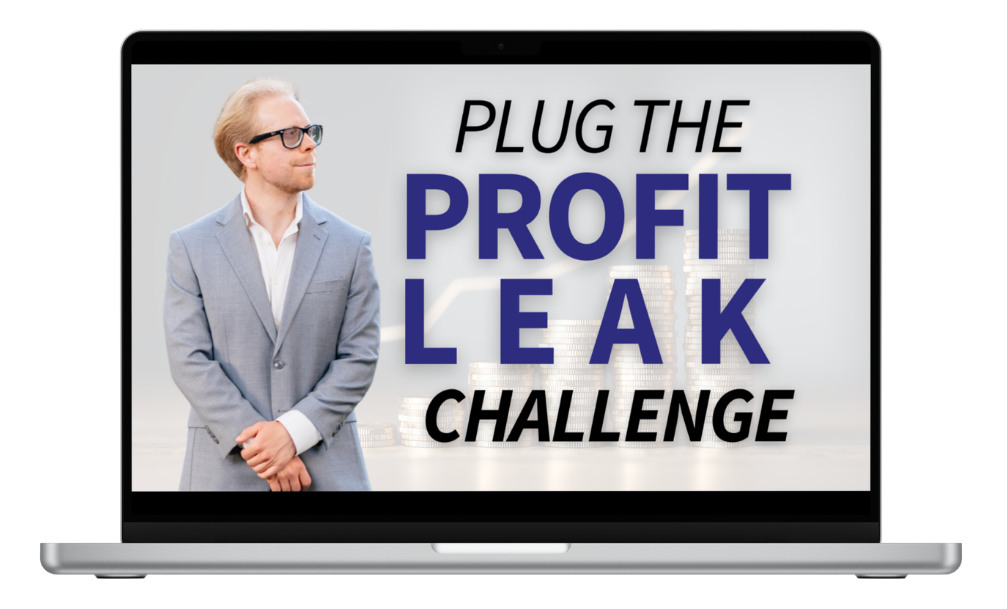
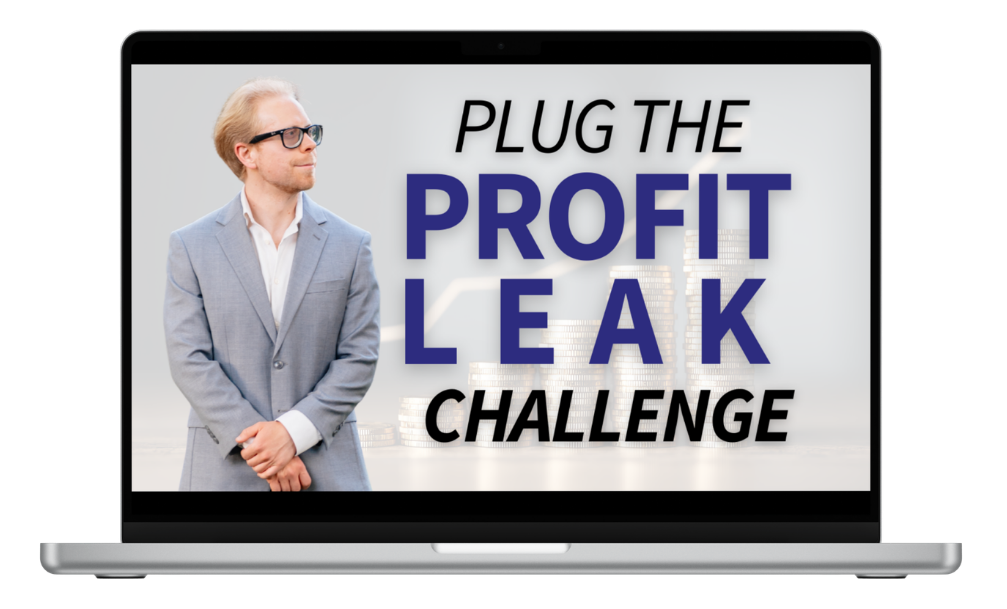
Now, if you want [00:27:00] help with this, I invite you to join me on my next plug, the Profit Leak Challenge. I have created a multi-day group consulting and advisory experience for business owners and enterprise leaders. What we get to do together is look at your business, look at your department, look at what you're doing, look at the ROI that you're looking at getting, look at the ROI of your employees.
Even look at the ROI of your customers. That is the other piece of the pie. And what we wanna do is align this ROI together So that we know what to focus on in our businesses. When we do this, we're able to multiply success, multiply ROI. I have had clients within just a couple of hours of the challenge unlock more than 100K in their business without increasing leads, without doing any of that, just by aligning ROI and seeing how they can leverage education as a competitive advantage for their business.
I want this for you too, which is why I invite you to buy a [00:28:00] ticket to the next challenge. And even though it's extremely important for you to just get in the door and buy at least a general admission ticket, I also invite you to look at the VIP ticket options. VIP gets you double the amount of time with me, and it empowers you to actually come to the challenge, bring talent LMS with you, bring your questions with you, and get my eyes and brain in your business, in your department, in your team.
I am really excited to be able to work with you. You can go to plugtheprofitlink.com to grab your challenge ticket today, or you can click on the link in the show notes and in the YouTube description. I'll see you in the challenge and in the next episode.
Thanks for tuning in to Learning Transformed. Now, if you're designing a transformational learning experience and wanna skip the overwhelm of trial and error, check out our e-learning platform finder. Just answer a few simple questions, and we'll match you with the right platform, plus an extended free [00:29:00] trial.
And as a bonus, you'll get free access to a course that walks you through building your learning experience on your matched platform. Click on the link in the show notes or go to www.e-learningpartners.com/e-learning-platform-finder.
I'd also love to hear from you. Leave a review on Apple Podcasts or Spotify, or drop a comment on our YouTube channel. Thanks for listening, and I'll catch you in the next episode
AI is rising and so are we